
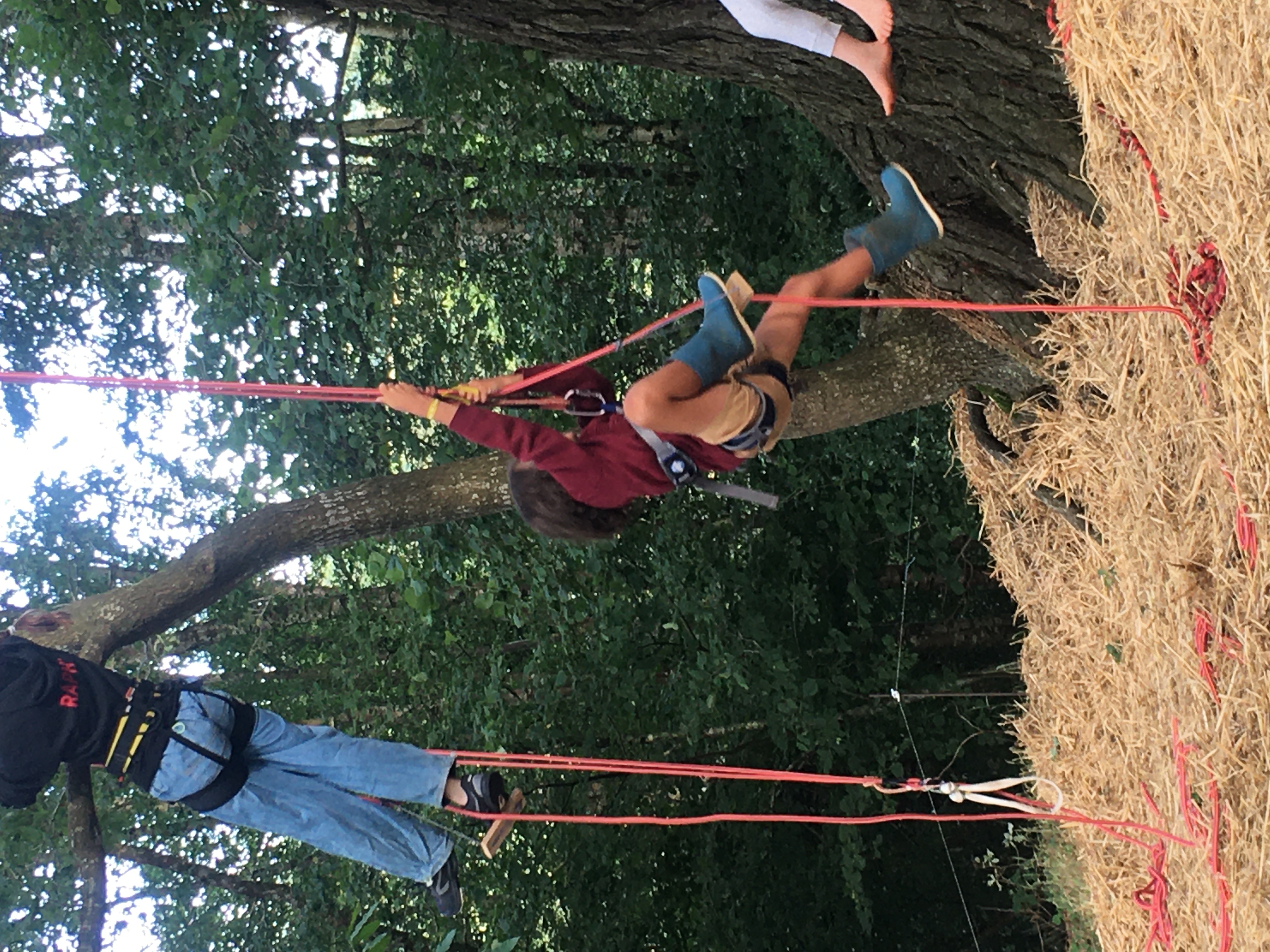
On the two questions I get asked more than any others
The socialisation question. I’ve been asked it approximately ten thousand times in the past twelve years. Someone once told me we’re supposed to begin socialising from around four months old, while we can’t even hold our own neck straight yet. I’ve started answering it differently.
I used to explain patiently that yes, unschooled children do in fact interact with other humans. Like, the world does have humans in it if you go outside. That my son has friends in multiple countries. Navigates disagreement, can read a room. All true. Now I just ask back: what kind of socialisation do you mean?
Because learning to sit in rows, wait for permission to speak, and perform enthusiasm for subjects you find deadening is a very specific social skill set. I’m genuinely not sure it’s the one worth optimising for. The socialisation I actually care about happens in real situations, between people of different ages and backgrounds who aren’t sorted by birth year. And that, lads and gents, is not something that happens inside a room.
The other question, right behind it
But how will he cope in the real world. The real world runs on schedules, they said. And I thought, yes. And look at everyone in it. Exhausted. Disconnected. Counting down to Friday since Monday morning. That’s the destination I’m supposedly failing to prepare him for. I’ll take my chances.
The two questions always arrive together, socialisation and the real world, as if they’re two separate concerns. They’re not. They’re the same concern, asked twice, and the concern is really: how will he learn to comply.
What Holt saw from inside the room
John Holt taught for years before he became known as the father of unschooling, and what changed him was actually take time watching. He noticed that children walk into a classroom already curious, already wanting to make sense of things, and that fear, not laziness, was usually what was actually running the room. Children learn to control that fear the way soldiers learn to control theirs, he wrote, adjusting to it, living inside it, and the adjustment is almost never good for them.
Sitting in rows and waiting to be called on is not a neutral, universal social skill that happens to be taught in schools. It’s a specific adaptation to a specific kind of institution, and Holt spent a career arguing that we’ve confused adapting to school with being prepared for life. He didn’t think the home should try to replicate what school does. He thought the value of the home was that it wasn’t a school at all.
What the real world actually rewards
If the real world ran on the ability to sit still, wait for permission, and perform interest you don’t feel, then the adults who’d done twelve straight years of that training would be the ones thriving in it. Instead the picture I keep seeing is exhaustion and disconnection and a slow countdown to the weekend that starts the moment the weekend ends.
I’m not claiming my son will float above every hard or boring obligation life will ever hand him. Holt was clear that unschooled children still meet real difficulty, still have to work through things they didn’t choose and can’t escape, the same as anyone. What he drew the line at was the difference between struggling with something because you’re reaching for a goal that’s actually yours, and merely submitting to force because someone somehow bigger told you to. One of those builds something in a person. The other, he thought, mostly destroys it.
So when I’m asked how he’ll cope in the real world, or whether he’s being properly socialised, I’ve stopped hearing two different worries. I hear only: will he know how to comply. And I’ve decided that’s not actually the question I’m trying to answer for him.
The tower that was never going to stand
There’s an old story about people who all spoke the same language and decided to build a tower tall enough to reach the Heavens. An impossible task from the first brick.
No amount of shared language or shared effort was going to close that distance, because the distance was never the kind that bricks could close.
The real world they keep warning me about is presented as something solid, something with a top, something you build toward for twelve years and then simply arrive at. But I look at the people who finished building it, who spoke the one approved language fluently and laid every brick they were told to, and what I see is exhaustion and disconnection, not a tower standing tall and beautiful against the sky. The thing they were promised at the top was never actually up there. It was never going to hold anyone once they reached it, because it was built on a premise that couldn’t bear the weight in the first place. I’m basically not helping build toward that. Not because I’m scattering my son as some act of defiance, but because I don’t think the tower was ever going to stand, and I’d rather he find out what’s actually solid ground before he spends years climbing toward something that was never going to hold him. If that means enormous gaps where the tower would have stood, so be it. I watched the thing being built long enough to know how it ends.
If my words and world touch you, you can
🫖 Buy me a tea