On what crisis is actually asking of us.
There is a message that has been circulating, attributed to White Eagle of the Hopi Indigenous people, that stopped me when I first read it. Not because it was comforting. Because it was honest in a way that most crisis messaging isn’t.
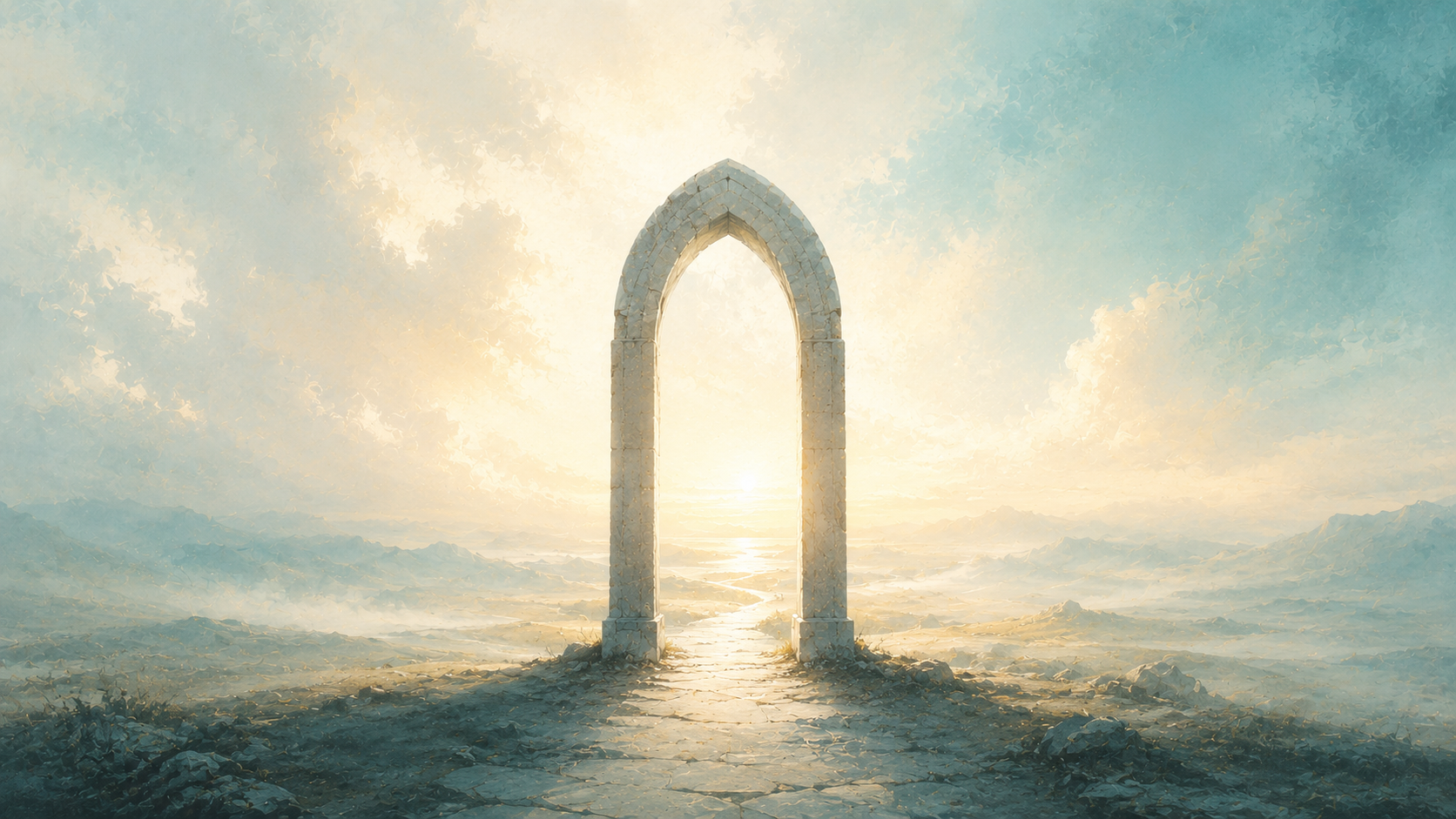
“This moment humanity is going through can now be seen as a portal and as a hole. The decision to fall into the hole or go through the portal is up to you.”
White Eagle, Hopi Indigenous
Two openings. Same moment. Completely different trajectories depending on where you place yourself in relation to it.
The Hole
The hole is familiar. It looks like refreshing the news at midnight. It looks like a low hum of anxiety that never quite resolves. It looks like helplessness dressed up as being informed.
None of that is judgment. The pull toward the hole is real and it makes sense. When things feel threatening and out of control, the nervous system wants to track the danger. It wants to keep watching. Vigilance feels like doing something.
But there is a point at which watching the wound stops being useful and starts being its own kind of wound.
The Portal
The portal asks something different of you. It asks you to take the pressure of the moment and turn it inward. To use disruption as an invitation to look at what you’ve been meaning to look at. To take care of your body, your home, your inner life. To reconnect with whatever you call your spiritual house.
White Eagle says something that I find quietly radical: you do not help by being sad and without energy. You help when good things emanate from you. It is through joy that one resists.
This is not the same as pretending. It is not looking away from what is hard. Indigenous and African peoples, as White Eagle reminds us, have survived what should not have been survivable, and they never stopped singing, dancing, lighting fires, finding reasons to be alive. That is not escapism. That is a form of resistance that runs deeper than protest.
The Vision Quest
In shamanic tradition, there is a rite of passage called the quest for vision. You go into the forest alone. No food, no water, no protection. You face what arises. And when you come back, you come back changed, because you have met your fears directly and discovered what lives on the other side of them.
Crisis, when we let it, functions the same way. It strips the unnecessary. It forces questions we had been avoiding. It holds us at the threshold between who we were and who we might become.
The question White Eagle is really asking is not whether things are difficult. They are. The question is whether you will use this particular difficulty as a door.
What Is Being Asked
Not stoicism. Not spiritual bypassing. Not a performance of positivity while things fall apart.
What is being asked is simpler and harder than any of that. Serenity in the storm. A daily practice of meeting the sacred, whatever form that takes for you. Staying rooted enough in your own ground that you have something to offer when the storm passes and the rebuilding begins.
Because it will pass. And when it does, what you carried through it, the quality of attention, the depth of care, the willingness to stay present, that will matter more than anything you consumed while it was happening.
Sing. Dance. Resist through art, joy, faith, and love.
That is not naive. That is ancient.
If my words and world touch you, you can
🫖 Buy me a tea