
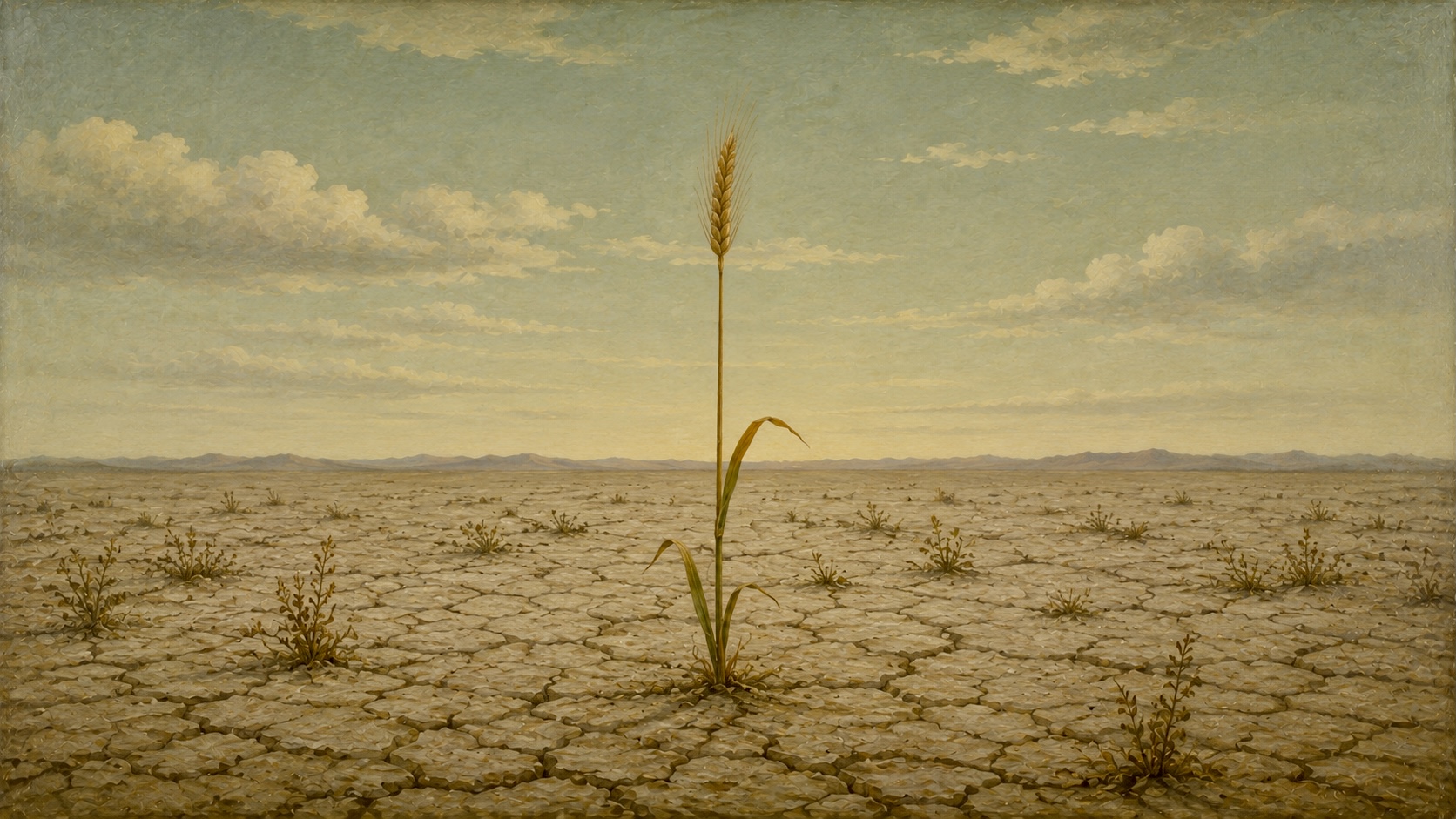
On why the gap between what we need and what we get has enormously widened.
There is an ideal version of nourishment that most of us carry somewhere in the back of our minds. Food grown in healthy soil, eaten close to where it was grown, in a life that includes enough rest and sunlight and movement. A body that gets what it needs simply by living well.
That version is not entirely a fantasy. But it is increasingly difficult to access, and pretending otherwise doesn’t serve anyone.
What Has Changed
The soil that grows our food is not what it was a century ago. Decades of industrial farming have depleted the mineral content of agricultural land in ways that are well documented and not seriously disputed. Magnesium, zinc, selenium, iodine — the levels in commercially grown produce have dropped significantly, and no amount of eating more vegetables fully compensates for what isn’t there to begin with.
At the same time, the demands on the body have increased. Chronic stress, artificial light, disrupted sleep, environmental toxins, the sheer cognitive and emotional load of modern life.. all of it creates nutrient demands that our ancestors simply didn’t have. The body is running harder on less.
And then there is absorption. A gut microbiome compromised by processed food, antibiotics, and chronic stress absorbs nutrients less efficiently than a healthy one. So even what we do eat and drink and take in may not be reaching the cells that need it.
The gap between what the body requires and what it actually receives has widened. Not because people are more careless, but because the conditions we are living in have changed faster than our bodies have been able to adapt.
Not a Fix, But a Foundation
This is where supplementation earns its place. Not as a shortcut, but as a way of closing a gap that the modern world has opened.
The most useful supplements are not the complicated ones. They are the ones that address the deficiencies most people are carrying without knowing it. Magnesium, which is involved in hundreds of enzymatic processes and which chronic stress depletes rapidly. Vitamin D, which most people in northern latitudes are low in for most of the year. Omega-3 fatty acids, which the modern diet is consistently short on. A broad-spectrum blend of the nutrients that food used to reliably provide and increasingly doesn’t.
None of this is exotic. It is closer to maintenance than medicine. Giving the body what it needs to do what it already knows how to do.
The body doesn’t need to be fixed. It needs to be resourced.
There is a significant difference between the two.
If my words and world touch you, you can
🫖 Buy me a tea